

Mayborn Fellow Introduces New Method for Fossil Conservation and Research
Mayborn Fellow Introduces New Method for Fossil Conservation and Research
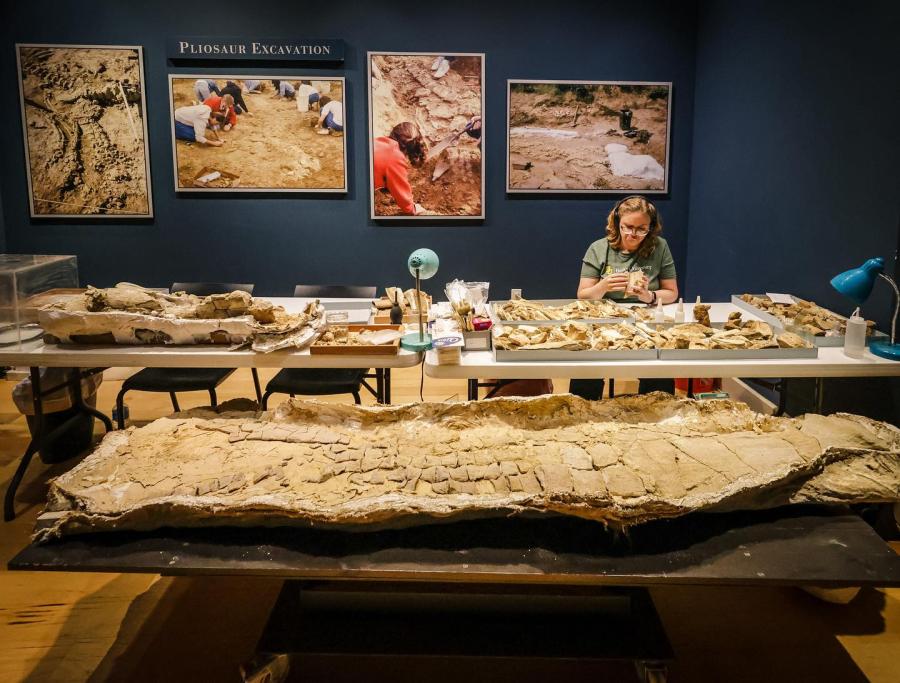
Mayborn's Bryce C. Brown Fellow Dava Butler has developed an innovative approach to fossil reconstruction that advances both conservation practice and scientific research. In a recent technical study, Butler introduces the “Mayborn Method,” a suite of techniques that uses lightweight paper–resin composites to stabilize fossil specimens while preserving their suitability for advanced imaging.
The method combines archival-grade kozo washi paper with thermoplastic resins commonly used in fossil preparation. Unlike traditional materials such as gypsum, epoxy, or metal supports, these composites are reversible, archival, and aligned with modern conservation standards. They can be used to fill gaps between fragments, reinforce fragile points of contact, and create internal structural supports that allow specimens to be safely handled, transported, and displayed.
A key advantage of the Mayborn Method is its compatibility with radiographic research. Fossils prepared with these techniques can be oriented along multiple planes for X-ray and CT scanning, expanding opportunities for non-destructive study. The approach is also adaptable across the conservation process—from field stabilization to gallery preparation—and is especially valuable for preserving fragile “sub-fossil” material.
Together, these techniques broaden access to research, strengthen long-term preservation, and reflect the Mayborn Museum’s commitment to innovation in museum science and collections care.