

Ancient Footprints from a Texas Coastline to Become Part of Mayborn Museum’s Collections
WACO, Texas — A remarkable piece of Central Texas history is making its way to the Mayborn Museum Complex: a dinosaur trackway preserved in limestone and gifted to the museum by a local ranch family for study, care and future public engagement.
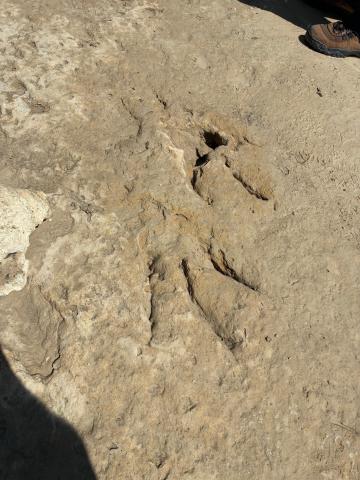
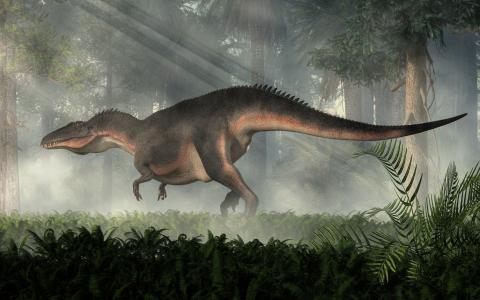
The fossil trackway, located approximately an hour and a half from Waco, records the movements of dinosaurs along a Texas coastline more than 100 million years ago. Researchers believe the tracks were made by the carnivorous dinosaur Acrocanthosaurus, a predator that lived in North America during the Early Cretaceous period, when the breakup of the supercontinent Pangaea was reshaping coastlines and creating new seaways across what is now Texas.
The trackway measures roughly 4 meters by 18 meters, preserving an extraordinary stretch of ancient landscape. The footprints were left in soft shoreline mud, likely along a floodplain drainage that opened toward the Tethyan seaway. Over time, the footprints were covered by sediment and preserved in a layer of fine-grained limestone.
Unlike a single fossil bone, a trackway captures behavior. Trackways can offer clues about how an animal moved, the environment it crossed and the ancient world it inhabited. Each footprint is a moment frozen in time.
As the Mayborn Museum prepares to study and care for this exceptional addition to its collections, the trackway will help connect visitors to a dramatic chapter of Texas natural history. The trackway will become part of the Mayborn Museum’s collections and will support the museum’s mission to connect visitors of all ages with the natural and cultural history of Central Texas.